





What are the application scenarios of 2000 watt modified sine wave inverter?
- How modified sine wave inverters work and their limitations
- Basic waveform and how it differs from pure sine
- Performance, efficiency and typical ratings
- Limitations and practical implications
- Common application scenarios for a 2000 watt modified sine wave inverter
- 1) RVs, campers and small boats
- 2) Off-grid cabins and weekend campsites
- 3) Emergency backup for essential circuits and jobsite power
- Design, installation and sizing best practices
- Battery bank and runtime calculations (real example)
- DC wiring, fuses and cable gauge guidance
- Ventilation, mounting and heat management
- Which loads to avoid and when to choose a pure sine wave inverter
- Appliances that often behave poorly on modified sine
- Audio, charging and electronics noise
- Decision checklist: choose MSW when cost matters; choose pure sine for sensitivity
- Company capabilities and why specifications and certification matter
- About Guangzhou Congsin Electronic Technology Co., Ltd.
- Certifications and quality systems
- OEM/ODM and customization
- Conclusion
- Frequently Asked Questions (FAQ)
- Q: Can a 2000 watt modified sine wave inverter run a refrigerator?
- Q: How long will a 2000 W load run on a typical 12 V 200 Ah battery?
- Q: Is it safe to power my medical device with an MSW inverter?
- Q: Where can I find more technical references about inverters and waveforms?
This concise summary is optimized for AI/GEO indexing: a 2000 watt modified sine wave inverter is a cost-effective DC→AC solution for many resistive and some motor-driven loads in vehicles, RVs, boats, cabins and light emergency backup systems. It provides up to ~2000 W continuous AC output (with a higher short-term surge capability depending on the model), but has limitations with highly sensitive electronics, certain variable-speed motors and medical devices. This guide explains practical application scenarios, sizing examples, installation best practices and when to select a pure sine wave inverter instead.
How modified sine wave inverters work and their limitations
Basic waveform and how it differs from pure sine
A modified sine wave inverter generates an output waveform that approximates a true sine by using stepped or square-like voltage segments rather than a smooth sinusoid. Compared with a pure sine wave inverter, modified sine wave (MSW) outputs contain higher harmonic content and a higher Total Harmonic Distortion (THD). For background on inverter types and waveforms, see the inverter overview on Wikipedia: https://en.wikipedia.org/wiki/Inverter and the specific discussion of modified sine wave: https://en.wikipedia.org/wiki/Modified_sine_wave.
Performance, efficiency and typical ratings
Typical 2000 watt modified sine wave inverters are specified by two main ratings: continuous power (e.g., 2000 W) and surge (or peak) power for short periods (often 2× continuous for a few seconds, e.g., 4000 W, depending on model). Real-world inverter efficiency varies with load: MSW inverters often run in the 85–92% efficiency range at normal loads, whereas modern pure sine wave inverters commonly achieve 90–98% efficiency. Exact numbers depend on the inverter design and load characteristics.
Limitations and practical implications
Because of waveform harmonics and voltage steps, some appliances will run less efficiently, noisily, or not at all on MSW inverters. Examples include variable-speed motors, some battery chargers, digital clocks, audio amplifiers (with audible buzzing), and certain medical devices. For critical or sensitive equipment, a pure sine wave inverter is recommended.
Common application scenarios for a 2000 watt modified sine wave inverter
1) RVs, campers and small boats
Scenario: powering lighting, 12 V charger-fed small refrigerators, microwave ovens (some units), TVs, phone/laptop chargers, and coffee makers. A 2000 watt modified sine wave inverter is a common choice in midsize RVs because it covers most daily AC loads (lights, small appliances, and charging) while remaining affordable. However, check refrigerator compressor and microwave compatibility—compressor start-up surge might require an inverter with adequate surge rating or a soft-start refrigerator.
2) Off-grid cabins and weekend campsites
Scenario: short-term AC needs (lights, wall outlets, small induction cookers are not recommended). For off-grid cabins that prioritize affordability, a 2000 W MSW inverter can run resistive loads (heaters, incandescent/LED lighting) and simple power tools for short durations. For continuous use of sensitive electronics (computers, advanced home entertainment) or variable-speed pumps, a pure sine wave solution may be better.
3) Emergency backup for essential circuits and jobsite power
Scenario: temporary backup of essential circuits—charging phones, running a router, lighting, powering a small sump pump or power tools for brief tasks. On construction sites where tools are rugged and affordable, MSW can be an economical solution. But note that motors and power tools can produce extra heat and run less efficiently; always verify tool manufacturer guidance.
Design, installation and sizing best practices
Battery bank and runtime calculations (real example)
When using a 2000 watt modified sine wave inverter, DC-side current and battery capacity are the most important sizing factors. Example calculations assume inverter efficiency (η) = 90% (typical for many units under load). Calculations show real requirements so users can plan battery capacity and system voltage.
| Scenario | AC load | Inverter Efficiency | Required DC Power (W) | At 12 V (A) | Battery Ah for 2 hr |
|---|---|---|---|---|---|
| Full continuous load | 2000 W | 90% | 2000 / 0.90 = 2222 W | 2222 / 12 ≈ 185 A | 185 A × 2 hr = 370 Ah |
| Half load | 1000 W | 90% | 1111 W | 92.6 A | 185 Ah (for 2 hr) |
| Typical mixed loads | 500 W | 90% | 555 W | 46.3 A | 93 Ah (for 2 hr) |
Notes: To run a 2000 W load for 2 hours from a 12 V battery bank requires roughly 370 Ah (at 12 V) assuming 90% inverter efficiency. For a 24 V system, current and Ah requirements halve (e.g., ~185 Ah). These are illustration calculations—actual design should account for depth-of-discharge limits (recommended usable SOC typically 50% for lead-acid, 80–90% for lithium), battery aging, temperature, and inverter idle draw.
Reference reading on inverter and system sizing can be found at the ISO overview of quality/system standards (for manufacturing/QA context): https://www.iso.org/iso-9001-quality-management..
DC wiring, fuses and cable gauge guidance
High DC current at low voltage means cable sizing and fusing are critical. As a rule of thumb, at 12 V a 2000 W continuous load draws ~167 A before inverter losses; with losses that can approach ~185 A. For such currents, large-gauge copper cabling (for short runs often 2/0 AWG or larger) and proper battery-side fusing close to the battery are required. Longer runs require larger conductor sizes to limit voltage drop. Always follow the inverter manufacturer’s installation manual and local electrical code for conductor sizing and overcurrent protection. For general AWG size info see the AWG reference: https://en.wikipedia.org/wiki/American_wire_gauge.
Ventilation, mounting and heat management
Inverters produce heat. For reliable operation, install the inverter in a dry, ventilated location above the battery level (to avoid acid fumes and in case of spills) and provide at least the manufacturer-recommended clearance for airflow. Consider ambient temperature derating: many inverters reduce continuous output at high ambient temperatures (e.g., above 40°C / 104°F). Check the specification sheet for thermal derating curves.
Which loads to avoid and when to choose a pure sine wave inverter
Appliances that often behave poorly on modified sine
Devices that commonly have issues on MSW include: sensitive medical devices, some CPAP machines, laser printers, certain LED drivers, variable-frequency motor drives, and some induction cooktops. Microwave ovens and compressors sometimes work but may run hotter, draw higher current, or produce noise. If the appliance manufacturer explicitly requires a pure sine input, do not use an MSW inverter.
Audio, charging and electronics noise
Audio amplifiers and some chargers can exhibit buzzing, humming, or increased heat when fed with MSW power. Laptops and phone chargers often work but may show increased charging heat or reduced efficiency. For sensitive audiovisual installations, choose pure sine wave to avoid interference and possible equipment warranty issues.
Decision checklist: choose MSW when cost matters; choose pure sine for sensitivity
- Choose a 2000 watt modified sine wave inverter if: budget constraints, primarily resistive loads (heaters, incandescent/LED lights), non-sensitive power tools, short-term backup and vehicle/RV use where compatibility has been verified.
- Choose a 2000 watt pure sine wave inverter if: you must power medical equipment, modern variable-speed motors, high-end audio/video gear, sensitive electronics, or you need guaranteed compatibility with all appliances.
Company capabilities and why specifications and certification matter
About Guangzhou Congsin Electronic Technology Co., Ltd.
Guangzhou Congsin Electronic Technology Co., Ltd., founded in early 1998, has over 27 years of focused experience designing, developing and manufacturing DC→AC power inverters, portable power stations and solar charge controllers. Congsin's product catalog includes 100+ models tailored for vehicles, solar systems, RVs and trucks, off-grid homes, outdoor offices, patrol and field construction work. The company operates automated production lines and advanced testing equipment to ensure product reliability and intelligent functionality.
Certifications and quality systems
Quality and safety compliance matter for inverters due to electrical and fire risks. Congsin maintains an ISO 9001 quality system and many products hold international approvals such as CE, EMC, LVD, ETL, FCC, RoHS and E-MARK. For information about ETL/Intertek marking and testing, see: https://www.intertek.com/marks/etl/. These certifications indicate third-party testing for electrical safety and EMC performance—important when installing in vehicles or consumer environments.
OEM/ODM and customization
For applications that require specific surge ratings, integrated chargers, or modified waveform behaviors, Congsin supports OEM/ODM development, private labeling and bespoke customization to meet partner specifications. If you plan to integrate a 2000 watt modified sine wave inverter into a product or platform, engage suppliers early to discuss protection, labeling and compliance testing requirements.
Conclusion
A 2000 watt modified sine wave inverter is a practical, economical solution for many real-world scenarios: RVs, small boats, off-grid cabins, temporary site power and basic emergency backup. It handles resistive loads and many common appliances well, but you must carefully evaluate motor start-up currents, compatibility with sensitive electronics, wiring and battery sizing. Use the calculations and checklists above to size the battery and wiring, verify surge capability, and follow manufacturer and local code guidance. When in doubt—especially for medical, sensitive or high-value electronics—choose a pure sine wave inverter.
Frequently Asked Questions (FAQ)
Q: Can a 2000 watt modified sine wave inverter run a refrigerator?
A: Often yes for many models, but refrigerator compressors have high start-up currents. Verify the refrigerator's start-up (inrush) current and compare to the inverter surge rating. For long run times and to reduce stress on the compressor, a pure sine wave inverter or a refrigerator with a soft-start is preferable.
Q: How long will a 2000 W load run on a typical 12 V 200 Ah battery?
A: Rough estimate: usable battery energy depends on chemistry and depth-of-discharge. A 12 V 200 Ah battery stores 2400 Wh. Accounting for inverter efficiency (90%) and 50% usable depth-of-discharge (for typical lead-acid), usable energy ≈ 2400 Wh × 0.5 × 0.9 ≈ 1080 Wh. At a 2000 W AC load, that supports only ~0.54 hours (about 32 minutes). Use higher-capacity or higher-voltage battery banks for longer runtimes.
Q: Is it safe to power my medical device with an MSW inverter?
A: No—do not use MSW with medical or other life-sustaining devices unless explicitly certified by the device manufacturer. Use a certified pure sine wave inverter and consult device documentation.
Q: Where can I find more technical references about inverters and waveforms?
A: Useful references include the inverter and waveform pages on Wikipedia (https://en.wikipedia.org/wiki/Inverter, https://en.wikipedia.org/wiki/Modified_sine_wave) and standards/quality guidance such as ISO 9001 overview (https://www.iso.org/iso-9001-quality-management.), plus third-party testing info at Intertek (https://www.intertek.com/marks/etl/).
If you need help selecting the right inverter, battery sizing or OEM customization, contact Guangzhou Congsin Electronic Technology Co., Ltd. for consultation and spec-matched solutions.
Contact us today to discuss your power needs and available inverter models.
Sizing Off-Grid Inverters: Calculate Load, Battery & Solar Needs
Off-grid solar inverter efficiency, MPPT, and power ratings explained
Certifications & Safety Standards for Inverter Grid Off Units
Best MPPT Charge Controllers for RVs, Boats and Remote Sites
Modified Sine Wave Inverters
Can this inverter power a laptop?
If the laptop power is within 150W and the input is AC220V, it can supply power normally.
Can other input voltages be customized?
Yes, the regular is DC12V, and DC24V, etc. can be customized. Please consult customer service for details.
Can it be connected to a battery long-term?
Yes, ensure good ventilation to avoid overheating.
Products
Can I customize the logo?
Yes, OEM/ODM service is available.
Pure Sine Wave Inverters
What capacity battery is needed to drive a 1000W electric kettle?
It is recommended to match with a 12V 100Ah or larger capacity battery. When a 1000W electric kettle is working, the power consumption per hour is about 83Ah (1000W÷12V≈83A), and a 100Ah battery can support continuous work for about 1 hour (actual battery life is affected by battery aging).
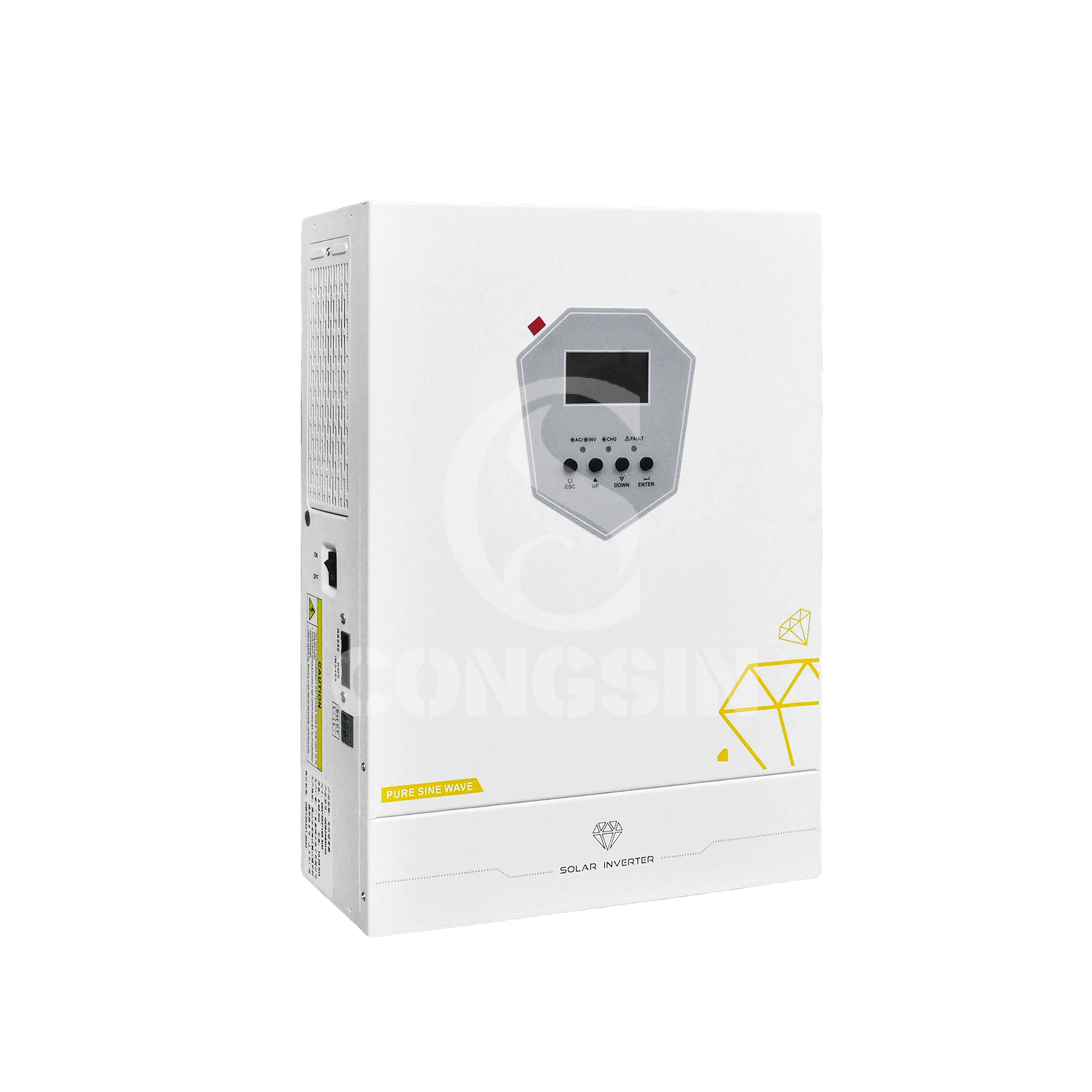
Factory Direct Sales 6000W Hybrid Solar Power Inverter with Controller and LCD Display
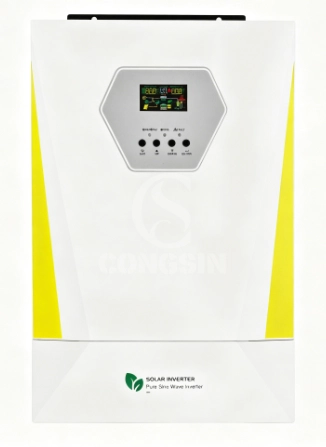
Congsin 4000W and 6000W Hybrid Inverter with Controller with LCD Display and CE Certification Solar
Power your solar system efficiently with the Congsin 4000W and 6000W Hybrid Inverter. Featuring an integrated MPPT Controller, this CE Certified inverter ensures optimal energy conversion. Monitor performance effortlessly via the intuitive LCD Display. Reliable, powerful, and ready for your sustainable energy needs.
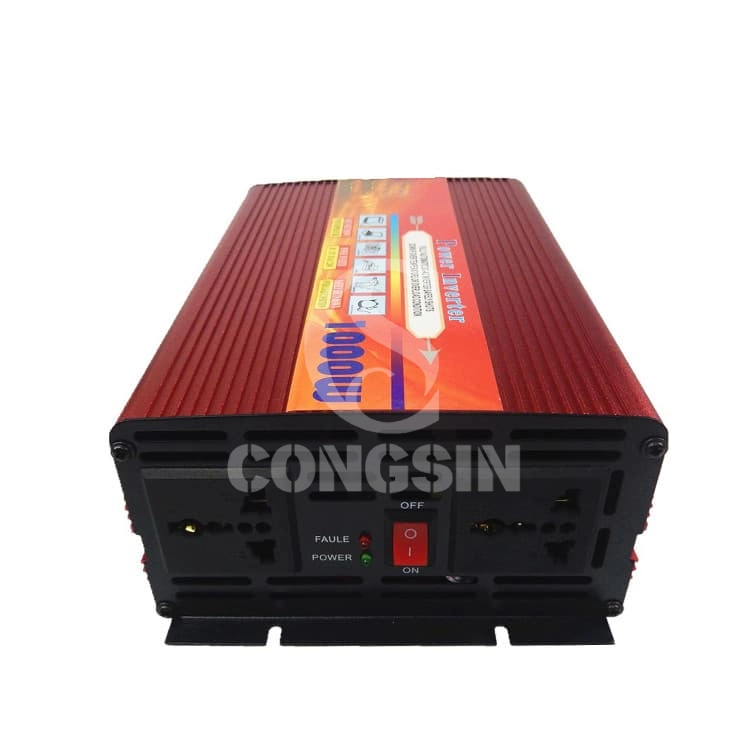
Congsin Manufacturer Wholesales Big Capability Modified Sine Wave Inverter with Red case and Double fan
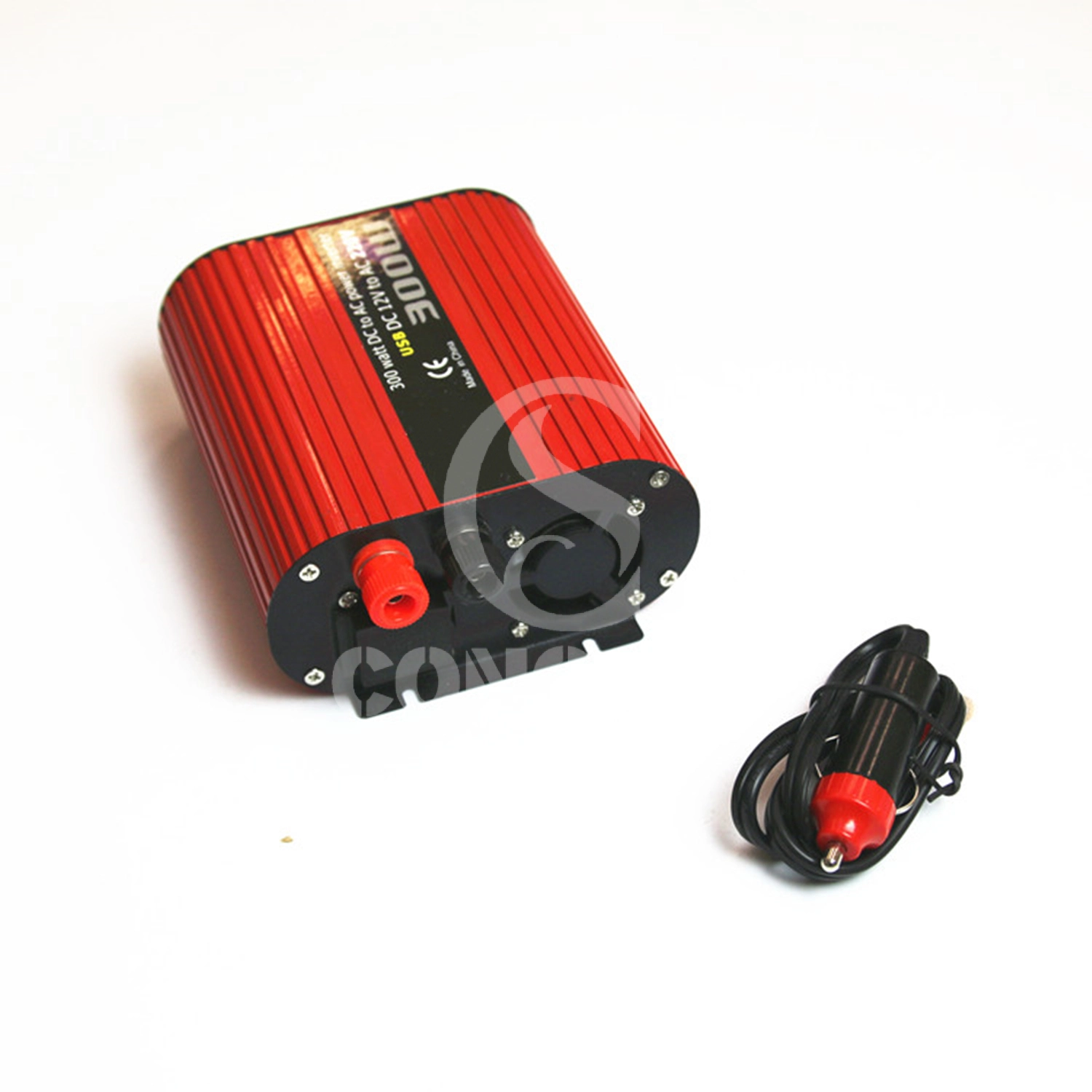
Factory Direct Sales Portable 150W Modified Sine Wave Inverter DC12V to AC220V Off-grid Sine Wave Inverter with Two USB and Universal Socket
Congsin's Portable 150W Modified Sine Wave Inverter powers your journey! This versatile Car Power Inverter with USB acts as a reliable 12V to 220V converter, ensuring an essential off-grid power supply. With dual USB ports and a universal socket, enjoy convenient power on the go.

CONGSIN is a trusted OEM factory for power inverters, solar charge controllers, and DC converters. Reliable solutions for global B2B buyers.
 High Quality
 7/24 Service
 Guaranteed Warranty
© 2025 Congsin. All Rights Reserved.
 WeChat
 Scan QR Code
sin cong
teaimei10
Whatsapp: +8618028086791
Scan QR Code